
Why Paid Marketing Is the Fastest Path to Growth
If you’ve ever watched your organic traffic crawl upward for months while competitors dominate every ad slot on Google, you already know the frustration. Organic SEO is powerful but it’s slow. When businesses need results now, paid marketing steps in as the accelerator.
At the center of every high-performing paid marketing strategy is effective PPC management. Whether you’re running Google Ads, social media campaigns, or retargeting sequences, managing your pay-per-click campaigns with precision is what separates businesses that burn through budgets from those that consistently generate strong returns.
In this guide, we’ll break down the top paid marketing strategies that work in 2026, how to approach budget allocation intelligently, and what it really takes to build campaigns that convert at scale.
What Is Paid Marketing and Why Does It Matter?
Paid marketing is any advertising strategy where a business pays to promote its content, products, or services to a targeted audience. Unlike organic methods, paid advertising puts your brand in front of the right people immediately no waiting, no hoping the algorithm favors you.
Businesses invest in paid advertising for several core reasons:
- Instant visibility in search results and social feeds
- Precise audience targeting based on demographics, behavior, and intent
- Measurable, trackable results tied directly to spend
- Scalability when something works, you can increase budget and grow fast
- Competitive edge in crowded, high-competition markets
In 2026, global digital ad spending continues to climb, and for good reason. Brands that invest strategically in paid channels consistently outpace competitors who rely solely on organic growth.
What Makes PPC Management the Core of Paid Advertising Success
Successful PPC management isn’t just about setting a daily budget and waiting for results to roll in. It requires an ongoing, disciplined process that covers every layer of campaign performance. This includes:
- Thorough keyword research and negative keyword pruning
- Ad copy testing and continuous creative iteration
- Bid strategy adjustments based on real-time performance data
- Audience segmentation and targeting refinement
- Landing page alignment with ad messaging
- Conversion tracking and accurate ROI attribution
Businesses that treat PPC management as a one-time setup task rarely see the returns they’re hoping for. The ones that commit to ongoing optimization consistently testing, learning, and refining are the ones generating sustainable, scalable results month after month.
A trusted PPC management approach also includes regular performance audits. Reviewing search term reports, quality scores, and impression share data on a weekly basis gives you the insight to act fast when something shifts, rather than discovering wasted spend weeks later.
Top Paid Marketing Strategies That Generate Fast ROI
1. Google Ads: Search Campaigns That Capture High-Intent Traffic
Google Search Ads remain one of the highest-ROI paid channels available today. Why? Because you’re reaching people who are actively searching for exactly what you offer. The buying intent is already there your job is simply to show up with the right message at the right moment.
Strategies that make Google Ads work harder for your business:
- Target long-tail keywords with clear purchase intent (for example, “affordable PPC management for e-commerce” vs. just “advertising agency”)
- Use responsive search ads with multiple headline and description variations so Google’s algorithm identifies the strongest-performing combinations
- Implement Smart Bidding strategies like Target ROAS or Target CPA once you have sufficient conversion data to fuel the algorithm
- Schedule your ads to run during your highest-conversion time windows using dayparting settings
- Align every single ad with a dedicated, purpose-built landing page never send paid traffic to a generic homepage
A practical example: A SaaS company targeting “project management software for remote teams” with a tightly focused ad group and a matching landing page consistently sees conversion rates 3–5x higher than broad, generic campaigns.
2.Social Media Paid Advertising
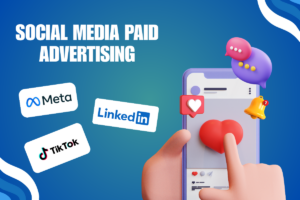
Platforms like Meta (Facebook and Instagram), LinkedIn, TikTok, and Pinterest have fundamentally changed how businesses reach their ideal customers. Each platform serves a different audience and a different buyer mindset.
- Meta Ads: Outstanding for B2C brands, e-commerce, and local service businesses. The targeting capabilities built around interests, behaviors, life events, and custom audiences are hard to match anywhere else.
- LinkedIn Ads: The go-to channel for B2B companies targeting decision-makers by job title, seniority level, company size, and industry vertical.
- TikTok Ads: Rapidly growing for brands targeting younger demographics. Short-form video creatives can generate impressive reach at relatively low cost-per-thousand impressions.
The key to social media advertising ROI is creative quality. Your ad needs to stop the scroll. Invest in compelling visuals, clear value propositions, and copy that addresses your audience’s real pain points directly.
3. Retargeting Campaigns: Converting Warm Audiences Into Paying Customers
Most website visitors don’t convert on their first visit research suggests it takes 6 to 8 touchpoints before a prospect makes a buying decision. Retargeting lets you re-engage people who’ve already shown interest in your brand, making it one of the most cost-efficient paid strategies available.
Effective retargeting approaches include:
- Dynamic product retargeting for e-commerce, serving users ads featuring the exact products they previously viewed
- Sequential retargeting that moves prospects through awareness, consideration, and decision stages with tailored creatives at each step
- Email list retargeting uploading your existing customer or lead database to Meta or Google to serve ads to people already familiar with your business
- Cart abandonment campaigns that deliver a compelling offer or timely reminder within 24–48 hours of the abandoned session
Retargeting consistently delivers a lower cost-per-acquisition than cold audience campaigns because the initial trust barrier has already been partially removed.
4. Display Advertising and Programmatic Buying
Display ads aren’t as intent-driven as search, but they’re highly effective for building brand awareness and staying visible throughout a longer buying cycle. Programmatic advertising the automated purchasing of display inventory across thousands of websites enables precise audience targeting at meaningful scale.
Use display advertising strategically to:
- Introduce your brand to new audiences at the top of your funnel
- Reinforce your message to prospects who’ve already visited your website or engaged with your content
- Support product launches or time-sensitive promotions with high-visibility placements across relevant publications
The key is creative relevance and smart frequency capping. Too many impressions without a conversion response leads to ad fatigue monitor your frequency settings carefully to maintain engagement without wearing out your audience.
Landing Page and Conversion Optimization: Where ROI Is Won or Lost
You can run a technically sound PPC management strategy and still see disappointing returns if your landing pages aren’t built to convert. Traffic without conversion is simply an expense.
High-converting landing pages consistently share these characteristics:
- A clear, benefit-driven headline that directly mirrors the ad’s core promise
- Minimal navigation to reduce distraction and keep visitors focused on a single action
- Strong social proof — customer testimonials, case studies, third-party reviews, and trust indicators
- One prominent, visually distinct call-to-action
- Fast load speed, particularly on mobile devices where a significant share of paid traffic lands
- Regularly A/B tested elements including headlines, CTA text, form length, and imagery
Even a 1–2% improvement in conversion rate can dramatically reduce your cost-per-acquisition and transform a break-even campaign into a consistently profitable one. Conversion rate optimization should run in parallel with your paid media program not as an afterthought after performance starts slipping.
Budget Optimization Strategies for Maximum Return
Spending more doesn’t automatically mean earning more. Intelligent budget allocation is one of the most underrated elements of strong paid campaign performance.
Here’s how experienced performance marketers approach budget optimization:
- Start with your highest-intent, lowest-funnel campaigns and prove ROI before expanding spend into upper-funnel awareness efforts
- Use dayparting to concentrate budget during the hours and days your historical conversion data confirms as most productive
- Pause underperforming ad sets promptly and reallocate that budget to proven, higher-performing campaigns
- Set clear ROAS or CPA targets before scaling never increase budget on a campaign that hasn’t yet hit its efficiency benchmarks
- Diversify across multiple platforms to reduce dependency on any single channel, as algorithm changes and rising auction competition can shift costs quickly and without much warning
Tracking ROI From Paid Campaigns: Measure What Actually Matters
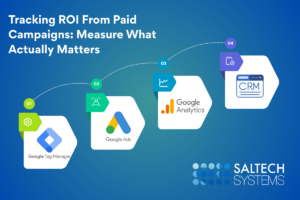
You can’t improve what you don’t track. Proper conversion tracking is absolutely non-negotiable for any serious paid marketing program, whether you’re managing it in-house or working with a PPC management agency.
An essential tracking setup includes:
- Google Tag Manager for centralized, streamlined tag management across all campaigns
- Google Ads and Meta Ads conversion pixels correctly installed and confirmed as firing on confirmation and thank-you pages
- Google Analytics 4 with goals, key events, and conversion paths fully configured
- Call tracking for businesses where inbound phone leads represent a significant revenue source
- CRM integration to track leads all the way through to closed revenue not just surface-level form completions
One of the most common and costly mistakes in paid media is optimizing toward vanity metrics like clicks, impressions, or reach. What matters downstream is how many leads became paying customers, what the average order or deal value was, and what your true cost-per-acquisition looks like measured against customer lifetime value. That’s the data that drives genuinely profitable decisions.
Conclusion: Build a Paid Marketing Engine That Consistently Delivers
Paid marketing, when executed with discipline and strategic clarity, remains one of the most reliable ways to generate fast, measurable business growth. From well-structured PPC management of your Google Ads campaigns to re-engaging warm audiences through retargeting and tightening every landing page touchpoint, the businesses winning in paid media aren’t necessarily spending the most they’re spending smarter.
Start by mastering one channel, proving your ROI model, and then systematically expanding your paid media mix. Consistent testing, rigorous performance tracking, and a genuine commitment to ongoing optimization are what transform an average paid campaign into a scalable growth engine.
If you’re ready to take your PPC management strategy to the next level and generate the returns your ad spend truly deserves, the strategies outlined in this guide are your proven roadmap. Start with the channel most relevant to your business right now, execute with precision, and build from there.
Frequently Asked Questions
Q1: What is PPC management and why is it important for growing businesses?
PPC management is the ongoing process of strategically overseeing, testing, and optimizing pay-per-click advertising campaigns to maximize performance and minimize wasted spend. Without consistent, active management, ad budgets are easily lost to poor targeting, irrelevant clicks, and underperforming creatives. Regular oversight ensures every advertising dollar is directed toward measurable business outcomes.
Q2: How much should a small business budget for paid advertising to see real ROI?
There’s no universal answer, but most small businesses can start gathering meaningful performance data with a monthly budget of $1,000–$3,000 on Google Ads or Meta Ads. The key is starting narrow focusing on one product, service, or audience and scaling only after validating your cost-per-acquisition model and confirming the unit economics actually work in your favor.
Q3: How long does it take for Google Ads to start delivering strong results?
Google Ads can begin driving traffic within hours of a campaign going live, but meaningful, optimizable performance data typically requires 2–4 weeks of running. Smart Bidding algorithms generally need a minimum of 30–50 conversions per month to function effectively. Plan for the first 30–60 days to be a focused learning and refinement phase before campaigns operate at full efficiency.
Q4: What are the best paid marketing strategies for small businesses in 2026?
For small businesses in 2026, the strongest ROI typically comes from Google Search Ads targeting high-intent local or niche keywords, Meta Ads leveraging lookalike audiences built from your existing customer base, and retargeting campaigns designed to re-engage website visitors who didn’t convert initially. These three approaches, executed consistently, can deliver meaningful returns without requiring enterprise-level budgets.
Q5: How do I accurately measure ROI from my paid advertising campaigns?
Measure ROI by setting up complete conversion tracking through Google Ads, Meta pixel, and Google Analytics 4 then calculate actual cost-per-acquisition against your average customer value. The formula is: Revenue Generated minus Ad Spend, divided by Ad Spend, multiplied by 100 for a percentage figure. Always prioritize revenue-based performance metrics over surface-level data like clicks or impressions for a true and actionable picture of campaign profitability.