

A Question Worth Answering Honestly
If a prospective client asked ChatGPT or Google’s AI Overview about your industry right now, would your business come up?
Most business owners can’t answer that with confidence. Their website looks professional, navigation is intuitive, and load times are fast by every traditional measure, the UX is strong. Yet none of that guarantees visibility in the channel where a growing share of buyers now begin their research: AI-powered search.
|
The distinction that matters: Strong UX keeps a visitor engaged once they arrive on your site. AI-readable content determines whether they ever arrive at all because it decides whether an AI engine surfaces you as the answer. |
This is the discipline behind AEO Answer Engine Optimization and it’s becoming a core requirement for any business, particularly in B2B, that depends on being found before a competitor is.
What AEO Actually Is
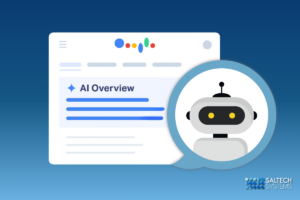
Traditional SEO returns a ranked list of links for a human to click through. AEO operates differently: AI systems such as Google AI Overviews, ChatGPT, and Perplexity read content, extract the most direct answer, and present it to the user often without a click at all. Most follow the same basic process: crawl publicly available content, segment it and assess which sections answer a query clearly, then generate a synthesized answer, often citing the source.
Content that’s vague or built for visual appeal rather than clarity gives these systems nothing usable the result isn’t a lower ranking, it’s exclusion from the answer entirely. This is what “AI search content” means: content engineered to be as legible to a machine as it is persuasive to a person.
Why Good UX Is No Longer Sufficient
A site can score well on every UX metric and still be invisible to AI search, for reasons a UX audit won’t catch:
- Key information lives inside images or embedded PDFs — text a crawler often can’t read.
- Headlines are brand-driven — instead of describing the service plainly.
- Pages imply information rather than stating it — a human infers meaning; a machine cannot.
- No schema markup is present — leaving machines to guess what a page represents.
A Quick, Practical Self-Test
Run through this checklist against your own site this week:
|
Ask yourself: ☐ Ask ChatGPT what your company does. Is the answer accurate and specific? ☐ Search a real question your buyers ask. Does your site appear in the AI-generated answer? ☐ View a key page with images and CSS disabled. Is the message still clear as plain text? ☐ Check your top pages for FAQ, Organization, or Service schema markup. ☐ Would a stranger understand what you do from your homepage’s first two sentences? |
Unchecked boxes mean your content is likely being overlooked by AI search regardless of how it performs for human visitors.
The Strategy: Making Your Content AI-Optimized
1. Lead with the answer
State what you do, for whom, and where in the first two sentences. AI systems favor content that answers a query immediately rather than building up to it.
2. Structure content for extraction
Clear headings, short paragraphs, and lists let AI systems isolate the section relevant to a query. Dense, unstructured text is far harder to parse, regardless of quality.
3. Implement schema markup
FAQPage, Organization, Service, and Review schema give AI systems explicit signals about your content, removing the need to infer structure from prose.
4. Write around real, full questions
Buyers type complete questions into AI tools, not keyword fragments. Build FAQs and service pages around the questions prospects actually ask, with direct answers.
5. Build topical depth, not isolated pages
AI systems weigh how thoroughly a site covers a subject. A core service page supported by connected FAQs and case studies signals real expertise.
6. Keep essential information as real text
Pricing and contact details should never exist only inside an image or embedded file. Duplicate anything essential as selectable, on-page text.
7. Keep content current
AI systems favor recently maintained content. Review core pages on a fixed schedule and update them whenever offerings change.
Before and After
|
Before: “We help businesses grow through innovative digital strategies tailored to your unique journey.” After: “Saltech Systems runs Google Ads and Meta Ads campaigns for small and mid-size B2B companies, with services spanning SEO, paid advertising, content writing, and website management.” |
The second version is specific enough for an AI system to extract and cite directly — that specificity is the entire discipline of AI search content.
Why This Is Especially Relevant for B2B
B2B buying decisions involve extended, research-heavy questions exactly the type now being directed to AI tools before a prospect ever contacts a business directly. A founder researching a specific service is often having that first, decisive conversation with an AI system, not a salesperson. Content not built to be found in that moment isn’t losing a click it’s losing the opportunity entirely.
Where to Begin
A full site rebuild isn’t necessary. Start with your three highest-intent pages home, core service, and about/contact rewrite each opening to state plainly what you do and for whom, add FAQ schema, and build a genuine FAQ section around real buyer questions. Expand from there.
|
Ready to make your content work as hard as your website looks? Saltech Systems’ content team builds AI-optimized, AEO-ready website content designed to be found by both search engines and AI answer engines, without compromising the user experience your visitors expect. |
Get your content audited and optimized: https://saltechsystems.com/marketing/content-writing/
FAQs: AI Search Content & AEO
1. What is AEO and how does it differ from SEO?
SEO optimizes content to rank in search results. AEO optimizes content to be understood, extracted, and cited by AI answer engines like ChatGPT and Google AI Overviews, which often answer users directly rather than linking to a page.
2. My site has strong UX and ranks well on Google. Is AI-optimized content still necessary?
Yes. Strong rankings don’t guarantee inclusion in AI-generated answers, which increasingly appear before standard results. UX retains the visitor who arrives; AI-readable content determines whether AI engines surface your business at all.
3. What’s the fastest way to check whether AI search engines can read my content?
Ask an AI tool a question your business answers and check the accuracy of its response. Then view a key page as plain text with images disabled, to see it as a crawler does.
4. Does schema markup meaningfully improve AI search visibility?
Yes. Schema FAQPage, Organization, Service, Review gives AI systems explicit signals about your content instead of forcing them to infer it from prose, making your content easier to cite confidently.
5. How often should B2B businesses update content to support AEO?
Review core pages at least quarterly, and after any change to pricing or offerings. AI systems favor current content, and outdated pages signal lower reliability.